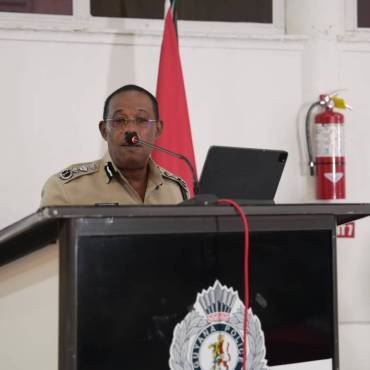

Submitted by Clifton Hicken
Commissioner of Police
Theme: Modern Policing for a Modern Nation: Integrating technology, innovation
and leadership to strengthen public safety and trust
The Annual Inspectors’ Conference, held on the 25th and 26th February 2026, marked a decisive
operational checkpoint in the continued transformation of the Guyana Police Force. Over two
intensive days of structured presentations and strategic dialogue, Inspectors acquire knowledge on
operational performance, administrative discipline, digital transformation, infrastructure
expansion, crime trends, traffic enforcement, professional standards, welfare systems, and the
execution readiness of the Force’s reform agenda at the station and divisional levels.
Unlike the Officers’ Conference, which focused on strategic direction, the Inspectors’ Conference
concentrated on execution—translating national mandates into frontline supervision, discipline,
and measurable service delivery.
National Direction and Ministerial Expectations
In her address to Inspectors, the Minister of Home Affairs, Ms. Oneidge Walrond, made it clear
that the engagement was not ceremonial—it was operational. Inspectors were reminded that they
serve at a defining moment in Guyana’s history, characterised by rapid national transformation,
expanding infrastructure, increasing traffic volumes, digital growth, and rising security demands.
The Minister reiterated that the President’s Eight Pillars constitute the operational mandate for the
Guyana Police Force:
- Justice System Integration
- Digital Transformation of Policing
- Border & National Security Modernisation
- Crime Prevention & Social Intervention
- Human Resource Reform
- Legislative Reform Agenda
- Cybercrime & Financial Crime Capacity
- Community Partnership & Public Safety
These pillars were framed not as abstract policies or conference rhetoric, but as clear operational
imperatives. The 2026 Charge was unequivocal: execution rests with Inspectors, and performance
will be measured not by effort, but by tangible results—demonstrated through visible supervision,
court-ready case files, consistent traffic enforcement, proactive disruption of organised crime, and
zero tolerance for corruption
Commissioner of Police Address
The Commissioner of Police, Mr. Clifton Hicken, reaffirmed that Modern Policing for a Modern
Nation is not merely a theme, but a national expectation that demands disciplined execution at the
station level. He underscored that Inspectors serve as the essential bridge between policy direction
and frontline delivery, with direct responsibility for ensuring that strategic priorities are translated
into measurable improvements in service to the public.
He reported that approximately 75% of the 2022–2026 Strategic Plan has been achieved, reflecting
tangible progress in technology-driven policing, infrastructure development, a 25% reduction in
crime, digitised case management systems, and strengthened human resource capacity. Key
investments in command centres, body-worn cameras, CCTV networks, expanded fleet assets,
welfare services, and prosecutorial support were highlighted as transformative milestones in the
Force’s modernisation agenda.
As the organisation moves forward, attention will shift to consolidation under a new strategic
pillar—Innovation, Technology and Adaptability. This phase will prioritise predictive policing
models, integrated electronic case management, biometric border security systems, digitised
examination processes, enhanced forensic capabilities, and the decentralisation of welfare services
to better support ranks across all regions.
The Commissioner emphasised that these initiatives constitute operational directives rather than
conceptual frameworks, and that Inspectors will be assessed on their ability to execute with
discipline, demonstrate accountability, and deliver measurable results that strengthen public safety
and reinforce public trust.
Day One – Operational and Administrative Readiness
Day One focused on the operational foundations of command:
- Administrative discipline and Stores Regulations
- Crime trends and enforcement strategies
- Traffic management and projections
- Intelligence-led and data-driven policing
- Case management and integration of technology
- Infrastructure
- Fleet and marine capability
- Command Centre operations
While overall serious crime declined by 25.5%, the Crime Chief, Mr. Wendell Blanhum, cautioned
that reductions must not create complacency. Gun robberies, narcotics trafficking, cybercrime, and
transnational criminal networks continue to demand proactive intelligence, precise deployment,
and structured supervision.
Deputy Commissioner “Administration”, Mr. Ravindradath Budhram, emphasised institutional
governance, performance accountability, and the continued implementation of the 2022–2026
Strategic Plan. He underscored the importance of strengthening performance management
systems, developing personnel capacity, enhancing partnerships, and preparing the organisation
for the 2027–2031 Strategic Plan under the new pillar of Innovation, Technology and Adaptability.
Deputy Commissioner “Operations” provided a comprehensive operational update on
infrastructure expansion, including newly constructed police stations, boat houses, and Command
Centres, alongside fleet and marine asset acquisition and training. He stressed the need for
structured patrol deployment, disciplined asset management, proper supervision and briefing of
ranks, monitoring of migrant activity in coordination with Immigration, and strict adherence to
use-of-force standards, reinforcing that operational readiness depends on consistent supervision
and accountability at the station level.
The Traffic Department identified persistent challenges, including speeding, impaired driving,
infrastructure gaps, and increased vehicle volume. The direction remains clear: technology enabled enforcement, consistent supervision, and structured public engagement.
The Command Centre presentation demonstrated expanded IVS capabilities, including License
Plate Recognition and Facial Recognition systems. However, technology must be governed
ethically and utilised consistently.
Examples of Decisions Made on the First Day:
- Continuous cash records training
- Regular impaired driving awareness initiatives
- Mandatory e-ticketing training across all divisions
- Implementation timelines were immediate.
Day Two – Accountability, Governance, and Strategic Readiness
Day Two addressed institutional integrity and future capability:
- Care and Custody of Prisoners
- Financial and Stores Regulations compliance
- Office of Professional Responsibility perspective
- Strategic Plan successes and projections
- Emerging threats and AI governance
- Human resilience and ethical leadership
The Office of Professional Responsibility reported measurable improvements:
- 5.5% reduction in overall complaints
- 41% reduction in neglect of duty complaints
- 35.5% reduction in assault complaints
However, recurring issues—poor supervision, incomplete records, delayed files—were identified
as supervisory weaknesses rather than systemic failures.
The inclusion of a new strategic pillar—Innovation, Technology and Adaptability—for the
2027–2031 Plan marks a structural shift toward digital transformation and predictive capability.
Case Management integration emphasised digital tracking, chain of custody integrity, and legal
compliance—transitioning from managing files to managing outcomes. Human resilience
discussions reinforced that transformation requires stable, ethical, and adaptable leaders—not
technology alone.
Examples of Decisions Made on the Second Day:
- Mandatory digital school registration
- Submission of Strategic Plan consultation responses
- Timely submission of service rendered accounts
- AI programme coordination with the University of Guyana
- Completion of ZARA IT training by August 2026
The Conference closed with a clear directive: reform must now be consolidated through disciplined
supervision and measurable results at the station level. While significant progress has been made,
sustained success depends on Inspectors’ leadership, accountability, and daily execution. The
standard going forward is simple—professionalism, consistent enforcement, and visible results
that strengthen public safety and public trust.
—————————–END—————————
See Statement Below