
Submitted by Clifton Hicken
Commissioner of Police
Theme: Modern Policing for a Modern Nation: Integrating technology, innovation and
leadership to strengthen public safety and trust
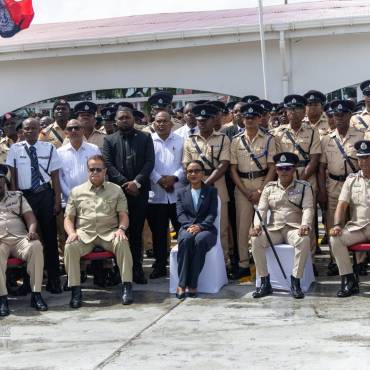
The Sergeants’ Conference 2026 was held on the March 04th, 2026 under the theme “Modern
Policing for a Modern Nation: Integrating Technology, Innovation and Leadership to
Strengthen Public Safety and Trust.” In his address, Commissioner of Police Mr. Clifton
Hicken reminded Sergeants that they represent the critical supervisory link between policy and
operational execution within the Guyana Police Force. He emphasized that while strategies and
policies guide the organisation, it is the conduct, discipline, and leadership of Sergeants that
determine how policing is experienced by the public.
The Commissioner highlighted that over the past five years the Guyana Police Force has undergone
one of its most structured reform periods, with approximately 75 percent of the 2022–2026
Strategic Plan implemented. This transformation has been characterized by the transition toward
intelligence-led and technology-driven policing, supported by initiatives such as the Safe Roads
Intelligent System, the deployment of 30 speed cameras, expanded e-ticketing enforcement, the
installation of body-worn cameras, digital workstations, and expanded Command Centre
operations. Infrastructure expansion, including new police stations, boathouses, and upgraded
training facilities, has further strengthened operational capacity across the country. These reforms
have contributed to measurable outcomes, including a reduction in serious crime and improved
operational coordination.
Following the Commissioner’s address, a series of presentations were delivered focusing on the
supervisory and administrative responsibilities of Sergeants within the Force.
Presentations addressed administrative discipline and Stores Regulations, emphasizing the
responsibility of Sergeants in maintaining proper accountability for police assets, and station
records. The discussion highlighted recurring administrative concerns within stations and
reinforced the requirement for accurate documentation, proper record-keeping, and strict
adherence to established procedures governing stores and operational resources.
A crime overview and strategic policing presentation provided Sergeants with an assessment of
current crime trends and operational responses. The discussion emphasized intelligence-driven
policing, targeted enforcement strategies, and the importance of coordinated investigative
supervision. Sergeants were reminded that effective case management, evidence preservation, and
supervision of investigators remain essential to ensuring successful prosecutions and maintaining
public confidence in the criminal justice system.
The Traffic Department presentation provided an overview of current road safety challenges and
projections associated with increasing vehicle volumes, infrastructure expansion, and evolving
traffic patterns. Sergeants were reminded of the importance of consistent traffic enforcement,
professional conduct during road operations, and the use of technology such as speed cameras, and
CCTV footage from the command centre to strengthen compliance, strengthen accident
investigation and reduce road fatalities.
Operational priorities were also discussed, with emphasis placed on structured supervision,
proactive policing, and the importance of station leadership in implementing operational
directives. Sergeants were encouraged to strengthen patrol coordination, maintain visibility within
communities, and ensure that operational activities are properly documented and supervised.
A detailed presentation was delivered on the Guyana Police Force Strategic Plan 2022–2026,
outlining the progress achieved under the reform programme and the continued transition toward
modern policing. Attention was given to the integration of technology, innovation, and
adaptability, which will form the seventh pillar of the 2027-2031 Strategic Plan. The discussion
highlighted the Force’s movement toward greater digital capability, improved data analysis, and
technology-supported operational decision-making.
In line with this transformation, a dedicated session examined digital transformation in policing,
focusing specifically on digital case management systems. Sergeants were reminded that effective
investigations depend heavily on properly structured case files and accurate documentation. The
discussion also referenced the importance of the 2024 Guyana Paper Committal Act, which
reinforces the need for comprehensive case files, electronic records, and properly prepared
documentation to support prosecutorial processes and court proceedings.
Further operational guidance was provided on the Use of Force Continuum, with particular focus
on the appropriate application of less-lethal force options, including tasers. The presentation
explained the colour-coded force model, which outlines the graduated levels of force available to
officers and the circumstances under which each level may be applied. Sergeants were reminded
that supervision of force incidents is critical to ensuring legality, proportionality, and
accountability.
Additional guidance was provided on the Music and Dance SOP, with emphasis on the procedures
governing applications, risk assessments, and the process of granting approvals. Sergeants were
advised to ensure that events are properly assessed that conditions are clearly communicated, and
that public safety considerations remain central to decision-making.
A presentation on professional responsibilities and disciplinary expectations reinforced the
importance of accountability within the Force. Sergeants were reminded that neglect of duties,
poor supervision, and administrative lapses often contribute to dismissed court cases and weakened
prosecutions. The discussion stressed that Sergeants must actively supervise investigations, ensure
statements and reports are properly prepared, and always maintain professional standards.
The conference also addressed the care and custody of prisoners at police stations, emphasizing
the legal and ethical responsibilities of Sergeants to ensure detainees are treated in accordance with
established procedures and human rights standards. Proper documentation, monitoring, and
supervision of lockups were highlighted as critical areas of responsibility.
At the conclusion of the conference, several operational decisions were agreed upon to strengthen
supervisory standards across stations such as:
- The Police Disciplinary Manual will be distributed to all Sergeants to reinforce
disciplinary standards and supervisory accountability. - Monitoring systems will be installed at the Traffic Chief’s Office, and traffic Officer
Regional Division 4A Office for monitoring traffic movement and congestion. - Compound sentries will be posted at police stations both day and night.
- Sergeants were instructed to be guided by the data from the DBMIU to strengthen patrol
and operational mapping. - Sergeants must have a clear understanding of the geographical boundaries of their
stations, including knowledge of the migrant composition within their policing areas. - Sergeants must ensure proficiency in cash records management.
The conference reinforced that the success of modern policing reforms depends not only on
policies and technology, but on the discipline, professionalism, and leadership exercised daily
by Sergeants at the station level. Their supervision remains essential to translating national
policing strategies into effective public safety outcomes.